

Funding is only the beginning of a venture capital relationship. Post-investment support from VCs can include strategic guidance, recruitment help, introductions, fundraising preparation and operational input, tailored to a portfolio company’s needs. The difference lies in how that support is organised and applied, especially when founders face a demanding decision or execution challenge.
It is reasonable to expect more than occasional advice, while recognising that support varies by investor, company and growth stage. This article explains what portfolio support can involve and how onboarding, regular check-ins and hands-on input can connect investor expertise with company priorities. It also explores how founders and investors can set expectations, communicate support needs and address conflicts constructively. These practices show where investor involvement can add value without taking responsibility away from founders.
Key Takeaways
- Set expectations with investors early so founders understand the scope of support and how to raise emerging needs.
- Connect portfolio support to the company’s priorities, from operational improvements to growth planning.
- Use onboarding and regular check-ins to surface issues, agree on priorities and keep communication purposeful.
- Make hands-on investor involvement practical by focusing it on specific needs such as recruitment, fundraising or strategic decisions.
1. Founder-investor relationships and conflict management
A productive portfolio relationship begins with explicit expectations, not assumptions about access or advice. Founders and investors should agree on strategic objectives, milestones, performance indicators, decision responsibilities and how urgent issues will be raised. In Visible’s survey of VC portfolio operators, 44% said portfolio companies communicated support needs directly, while 29% said investment team members communicated them. These figures underline the value of naming a clear route for requests. Regular, direct communication can also help both sides monitor progress and address differences before they affect confidence or execution.
Before accepting funding, founders can assess a VC’s support by asking for specific examples of help with recruitment, strategic decisions and later fundraising. Clarify who will provide that support, how to raise needs and what to expect from board participation. Compare the answers with the company’s priorities and the investor’s proposed role. A quarterly board meeting can provide formal oversight, but founders should also understand whether practical support continues between meetings.
Fundraising preparation is one area where investor involvement can be concrete. A VC may help refine the company narrative, prepare a pitch and introduce potential investors. Founders can discuss how introductions are selected and how the investor will present the business to prospective backers. Executive coaching can also help founders manage pressure, examine leadership decisions and recognise unsustainable work patterns. For example, a founder balancing repeated hiring and fundraising demands could use coaching to set priorities and maintain sound decision-making.
Conflict calls for a defined process. State the disagreement, identify the decision at stake and separate evidence from assumptions. Then compare options against agreed milestones and long-term objectives, and record the decision and responsibilities. Excessive involvement can blur accountability, slow decisions or shift management’s focus from the company’s needs to an investor’s priorities. Misaligned support can also waste time, such as pursuing introductions that do not fit the fundraising strategy. Open communication, empathy and a focus on mutually beneficial solutions can help resolve tensions while preserving clear leadership responsibilities.
2. What is Portfolio Support?
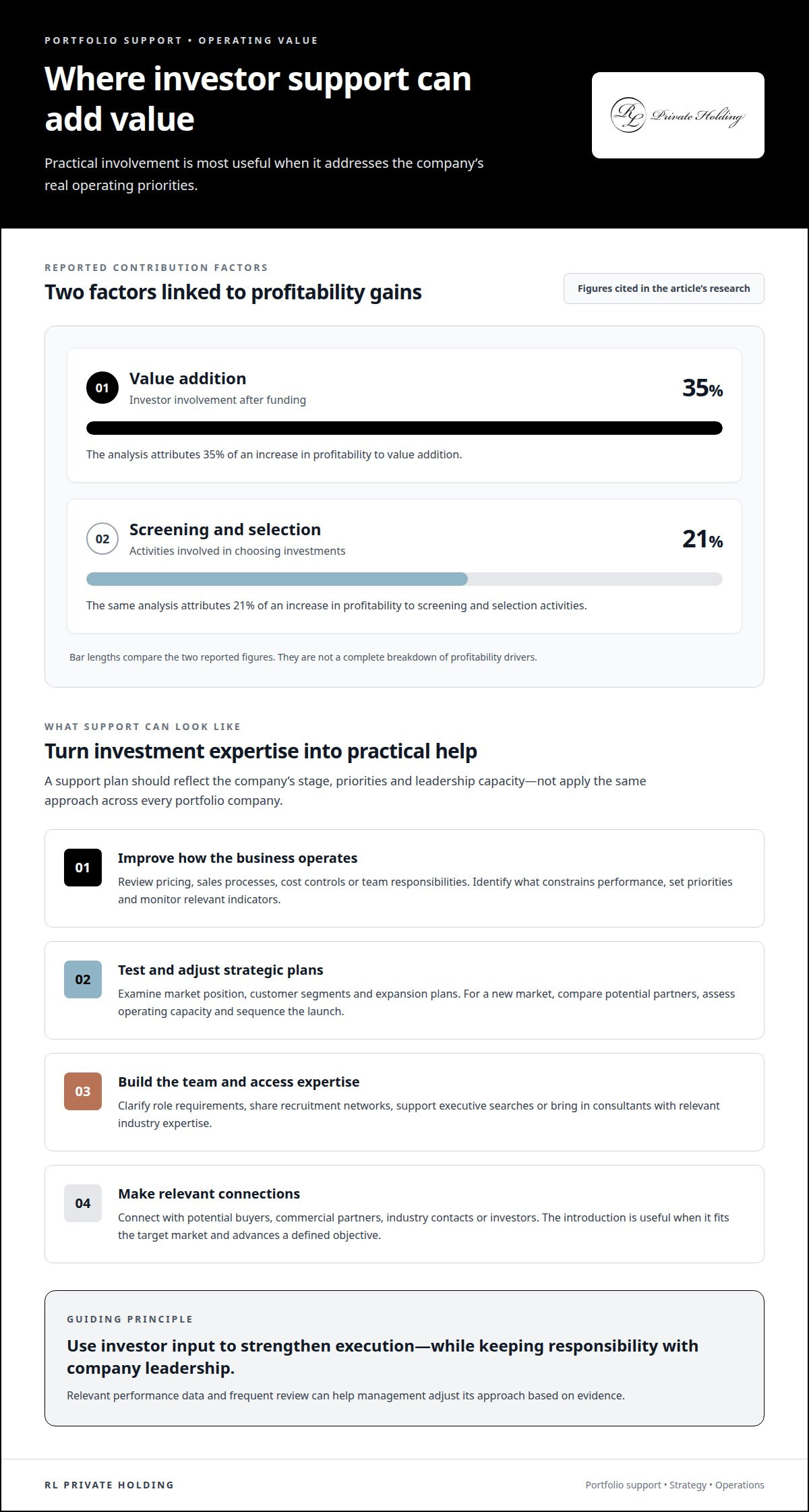
Portfolio support is practical assistance that helps a company turn invested capital into stronger operations and sustainable growth. It can include strategic guidance, operational analysis, recruitment, industry introductions, fundraising preparation and specialist expertise. The support plan should reflect the company’s stage, priorities and leadership capacity, rather than apply the same approach across the portfolio.
Operational value creation begins with identifying which parts of the business constrain performance. A VC may review pricing, sales processes, cost controls or team responsibilities, then help management set priorities and monitor relevant indicators. An analysis cited in the research attributes 35% of an increase in profitability to value addition, while 21% was attributed to screening and selection activities. These findings distinguish investor involvement after funding from the initial decision to invest. For EBITDA growth, the practical focus is usually on improving operating income through better execution, not pursuing growth at any cost.
Strategic guidance can help leadership test assumptions about market position, customer segments and expansion plans. For example, a company entering a new market may need to compare potential partners, assess operational capacity and sequence the launch. Frequent review of relevant performance data can reveal where the strategy needs adjustment. Learning from these reviews helps management make decisions based on evidence, while keeping responsibility for execution with the company’s leaders.
VCs can support portfolio company hiring by clarifying role requirements, sharing recruitment networks and helping with executive searches. They can also advise on the leadership profile needed for the company’s next operating stage. When specialist knowledge is needed, a VC may bring in consultants with relevant industry expertise.
Customer introductions and partnership support can connect a company with potential buyers, commercial partners or industry contacts. Their value depends on whether an introduction fits the target market and advances a defined sales objective, rather than simply adding names to a contact list.
In Luxembourg and across Europe, portfolio support can include strategic and operational guidance, recruitment, introductions, fundraising assistance and access to specialist expertise. Its form depends on the company’s needs and growth trajectory, not a uniform regional model. Founders assessing capital partners can consider how an investment approach aligns with the operational priorities they need to address.
3. Proactive onboarding and regular check-ins
Effective onboarding turns investment diligence into a working plan for the venture. Founders and investors can document company priorities, key performance indicators, decision owners and immediate support needs. They can then match relevant investor networks, specialist expertise and upcoming milestones to those priorities. For example, a startup preparing to expand its sales team may prioritise recruitment support and postpone introductions unrelated to that goal. This gives each check-in a clear purpose and tailors support to the company’s stage.
Regular check-ins work best when their cadence and agenda match the business, rather than follow a fixed template. A meeting can review progress against agreed milestones, identify a new constraint and assign follow-up actions. Keep the discussion tied to operating evidence, such as hiring progress or customer acquisition, and record decisions for the next review. In a survey of VC portfolio operators, 27% said support needs were communicated through investor updates. A concise update can therefore make needs visible between meetings, especially when it states the issue, its business impact and the assistance requested.
Shareholder updates should be regular, candid and useful for decision-making. Founders can report progress, missed targets, cash-flow pressures, significant hires and emerging risks, along with the action being taken. If a product launch is delayed, for example, explain why, what priorities have changed and where investor input could help. Clear reporting supports informed discussion and reduces the risk of investors hearing about a material challenge only after it has affected execution.
Support priorities often shift as a venture develops. At seed stage, the focus may be validating the business model, early hiring and learning from customers. At Series A, it may shift to building repeatable sales, strengthening leadership and preparing systems for expansion. Later-stage venture capital support may address international growth, executive search, strategic partnerships or exit preparation. These are possible priorities, not fixed rules: the company’s operating needs and growth plan should guide the support. Before engaging outside consultants, define the expertise required and the intended outcome.
4. Hands-on management support
Hands-on management support applies investor experience to specific operating challenges while company leaders retain responsibility for execution. It can include defining an executive role, reviewing candidates or preparing for a major commercial decision. The distinction matters: advice should strengthen the company’s ability to act, not create a second management structure. For example, an investor can help a founder assess whether a proposed senior hire fits the company’s operating priorities.
Board governance provides a formal setting for oversight and strategic input. Venture capitalists may attend quarterly board meetings, contribute their views and then move on to other commitments. Founders should distinguish board-level guidance from ongoing operational involvement. The board can review performance, challenge assumptions and discuss significant decisions, while the executive team remains accountable for day-to-day management. Clear decision-making roles help prevent advice from turning into conflicting instructions.
Direct assistance can also address talent and execution gaps. An investor may support an executive search by refining role requirements, identifying candidates through professional networks and helping assess leadership experience. For an acquisition, support may include considering deal terms, evaluating exit timing and planning post-acquisition integration. These contributions are most useful when tied to a defined objective, such as filling a leadership gap before expansion or assigning clear responsibilities after a transaction.
To make investor involvement effective, founders can define the issue, the input they need and who owns the decision before requesting help. They can then agree on next steps and assess whether the advice was useful. For example, an investor’s introduction may open a hiring conversation, but the company still evaluates the candidate against its needs. This keeps accountability clear and helps distinguish practical support from interference.
Investors considering how governance and active ownership fit their portfolio strategy can explore private equity investment management as a related investment perspective.
RL Private Holding: Venture Capital Funding
RL Private Holding provides Venture Capital Funding for founders considering external capital to advance their company’s development. Funding decisions involve more than capital: founders also need to assess strategic alignment, communication, governance and the practical support that fits their priorities. These considerations can help focus a discussion about a potential investment.
Turn to RL Private Holding when your company is evaluating venture capital as part of its funding plans. Consider how much capital the company needs, how it will use the funds and which strategic priorities it aims to address. A clear account of these factors can frame the conversation and help establish whether the opportunity fits your objectives. For investors, Private Equity Investment Management, Real Estate Asset Management and Wealth Management Services address other investment needs.
Contact RL Private Holding to discuss Venture Capital Funding in relation to your company’s plans.
Make the next investment decision with purpose
The next step is to turn company priorities into a clear investment discussion. Founders can identify decisions where capital or investor input may matter, then consider how those decisions fit their operating plans and leadership responsibilities. Investors can use the same approach to assess whether their intended involvement supports the company’s direction. This preparation makes discussions about post-investment support from VCs more concrete, tying expectations to actual business needs rather than broad assumptions.
For a founder, this may mean setting out the company’s financing objectives and the expertise needed to pursue them. For an investor, it may mean considering how the investment fits a wider portfolio strategy. RL Private Holding’s investment activities include Venture Capital Funding, Private Equity Investment Management and Real Estate Asset Management, providing context for a discussion about investment objectives.
To take that discussion forward, contact RL Private Holding to discuss VC support. A considered conversation can help clarify the questions that matter as you plan the company’s next stage.
Frequently Asked Questions
What is Portfolio Support?
Portfolio support is the practical contribution an investor makes to a company after investing, beyond providing capital. It can help founders address a specific business constraint, such as refining a go-to-market plan before entering a new customer segment. Its scope depends on the company’s priorities and the investor’s expertise. Effective post-investment support from VCs connects that expertise to decisions the business needs to make.
What post-investment support do venture capital firms typically provide to startups?
Venture capital firms may assist startups with strategy, hiring, business development, industry relationships and operational planning. Priorities can change as a company develops: a startup testing demand may need help interpreting customer feedback, while one preparing to expand may seek advice on partnerships or international growth. Investors can also bring in specialist consultants when a company faces a technical or sector-specific challenge.
How do venture capitalists support startups with fundraising and introductions to later-stage investors?
Venture capitalists can help founders sharpen the company’s fundraising narrative, prepare a pitch and introduce potential investors whose interests fit the business. Before making introductions, they can help founders assess prospective investors’ credentials and potential contribution. A practical approach is to clarify the next round’s purpose, explain how funding supports the plan, and tailor the discussion to each investor rather than circulating one generic pitch.
What operational and strategic guidance do VCs offer after investing?
VCs may help management assess pricing, sales processes, partnerships, expansion plans and key performance indicators. If sales growth stalls, for example, an investor could help examine customer segments and go-to-market execution before recommending a strategic change. For a planned exit, guidance may cover timing, deal terms and post-merger integration. Management remains responsible for weighing that input against the company’s evidence and objectives.